
Commercial Printing
RF Welded PVC Products
We join layers of PVC film along defined lines to make pockets, sleeves and envelopes. Starting with the dimensions of the contents, we draw the openings and weld allowances and keep printed areas clear of the joining lines.

1 / 4 · Open blue card holder showing its internal pockets
Applications
- Card holders and wallets
- Document sleeves
- Notebook and product covers
- Minimum order quantity
- 500 pieces
- PVC pocket and sleeve dimensions
- There is no fixed size limit. An A5 document measures 14.8 × 21 cm, for example; the finished sleeve also needs insertion clearance and welding allowances.
- Weld construction
- RF welding joins compatible plastic layers. Not every plastic is suitable for the same welding process.
- Usable pocket dimensions
- Measure pocket width between the inner edges of the side welds. Usable depth runs from the opening to the bottom weld. Thick samples may be difficult to insert if the opening is sized only to their width.
- Pocket count and product quantity
- One sleeve may have separate pockets for a card and a document. Specify each pocket's usable dimensions. Together, the two pockets count as one finished sleeve.
Related printing services: Screen Printing
Before printing
- Part sample
- Share the documents or parts that will fit into the sleeve or pocket. Show insertion and removal directions on the drawing.
- Separate drawing lines
- Define printing, cutting and welding lines separately. Name each pocket and its opening direction where several are included.
In high-frequency welding, electromagnetic energy generates heat at the PVC joint. The softened layers fuse under pressure without a separate adhesive layer.
Welding-tool shape defines the joint's width and surface impression. Tool pressure, energy and processing time affect seam continuity and bonding quality.
Related products
All Products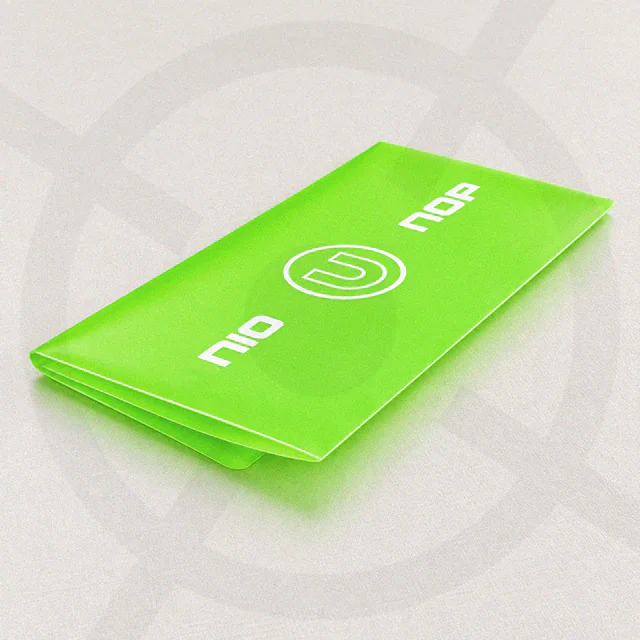
Printed PVC Envelopes
Printed PVC envelopes with a flap for documents and small sets.

Printed Plastic Folders
Plastic presentation folders with covers, pockets and printing planned for the document volume.
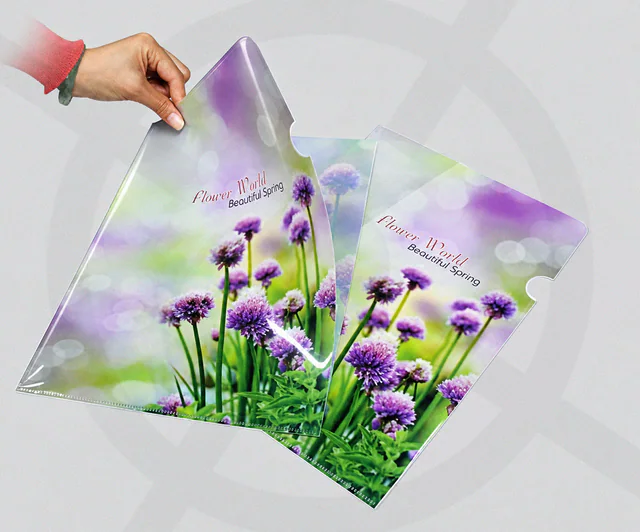
Plastic L Folders
Printed plastic folders with open top and side edges for inserting documents without punching holes.
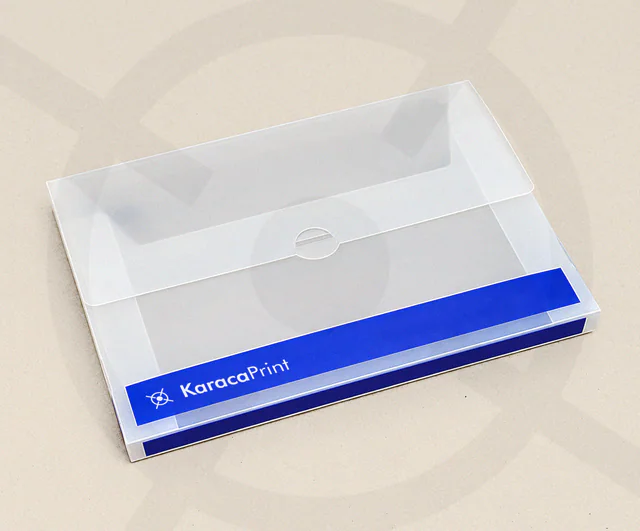
Plastic Document Wallets
Printed plastic document wallets with a flap and space for a stack of papers.