
Labels and Stickers
Tyre Labels
Tyre labels keep model, size and code details on the product for sales and stock control. Tread and sidewall textures differ, making placement important. Adhesion and readability are checked for the tyre surface and expected storage period.

1 / 3 · Colour scale highlighted on a tyre information label
Applications
- Tyre product information
- Warehouse stock code
- Model identification at the point of sale
- Minimum order quantity
- 500 pieces
- Tread width and label orientation
- Measure the label area on the tyre and consider which edge remains visible in a stack. Test a shared template on the narrowest tyre model as well.
- Model and classification
- Model, size and code share one label. Distinguish similar model names carefully to preserve sales and stock-record matching.
- Label position on the tyre
- Tread and sidewall surfaces need different layouts. Texture, placement and storage duration affect adhesion and readability.
Related printing services: Screen Printing, UV Printing
Before printing
- Information matching list
- Check each design against the correct tyre model and size in the list. Do not approve printing from similar filenames alone.
- Barcode position
- Preserve barcode clear space and position the code where tyre curvature will not fold it. Test an applied sample with the actual reader.
An adhesive suited to the rubber texture helps establish surface contact. A label system chosen for the grooves supports model and barcode information on the tyre.
Barrier-layer labels help limit migration of oils from the rubber to the printed surface. This supports a clean information area during sales and storage.
Related products
All Products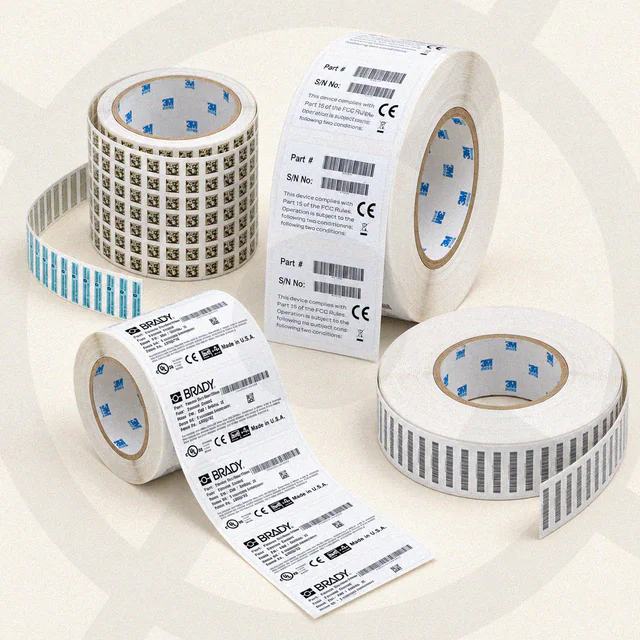
Barcode & QR Labels
Labels that match your records with fixed or variable barcodes, QR codes, names and serial numbers.

Roll Labels
Roll labels for hand or machine application to bottles, jars and boxes.

PVC Vinyl Labels
Screen-printed PVC vinyl labels for equipment warnings and outdoor directions, made to suit their operating conditions.
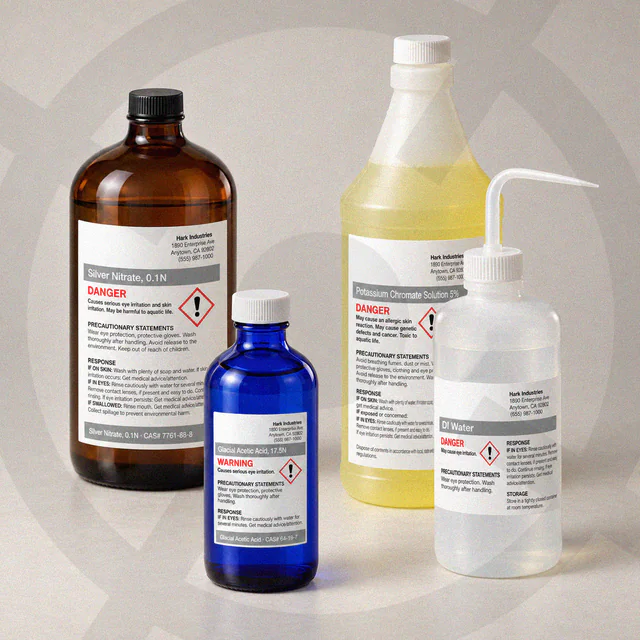
Chemical Product Labels
Printed labels combining product information and approved warnings on bottles, containers and drums.