
Labels and Stickers
VOID Security Labels
VOID labels reveal text or a pattern on the label or application surface when lifted. Where the trace appears and how it develops depend on the material, surface adhesion and dwell conditions.

1 / 3 · VOID lettering left by a lifted label on a black surface
Applications
- Packaging closure checks
- Electronic product joints
- Package opening indicators
- Minimum order quantity
- 500 pieces
- Label dimensions across the closure
- With the cover closed, measure the flat surfaces on both sides of the joint. Part of the label must sit on the cover and part on the body. Check where the opening trace appears using a sample of the same material.
- Where the removal mark remains
- Depending on construction, the VOID pattern appears on the label, substrate or both. Choose the trace type for the intended inspection need.
- Surface and dwell time
- Surface cleanliness, adhesion and dwell conditions affect the VOID trace. Samples establish how the same label behaves on different parts.
- What is the difference between VOID and destructible security labels?
- Separating a VOID label's layers reveals text or a pattern. Destructible security labels break apart during attempted removal. Choose according to the joint being monitored and the application surface.
Related printing services: Screen Printing, UV Printing
Before printing
- Lid movement
- Distinguish the fixed body from the opening section in the drawing. Add a photograph showing the cover's movement and label position across the joint.
- Pattern and warning
- Keep the company name and tamper warning concise. Check that printing does not obscure the security pattern and that the trace is visible in a removal sample.
The VOID effect results from controlled separation between label layers. The security pattern is built into the material and operates independently of the logo printed above it.
A VOID label with a serial number or barcode can combine tamper indication and product identification. The code links to a product record, while the VOID construction indicates removal.
Related products
All Products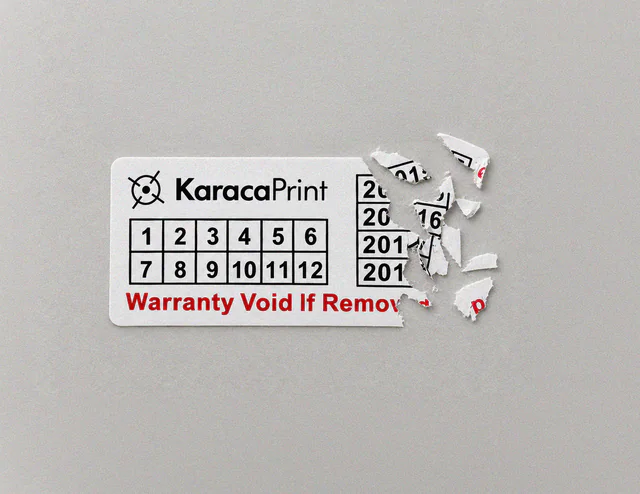
Destructible Security Labels
Printed security labels for device covers and joints that help reveal opening attempts by breaking apart during removal.
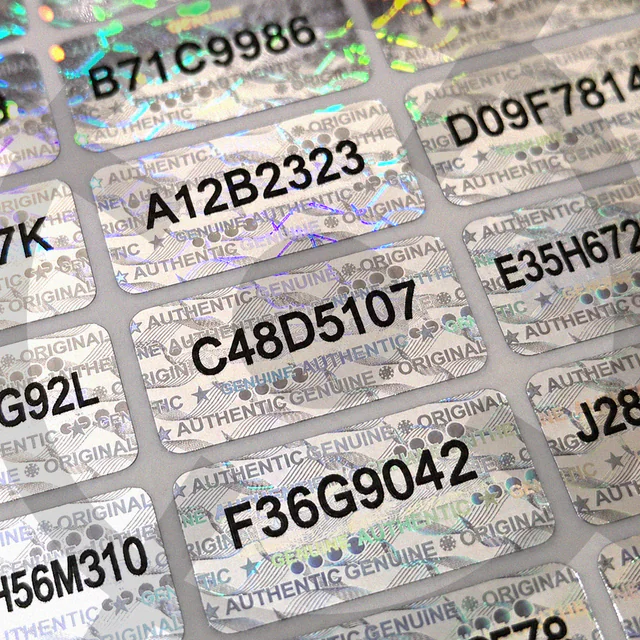
Hologram Labels
Labels combining logos and numbers with holographic reflections that change with the viewing angle.
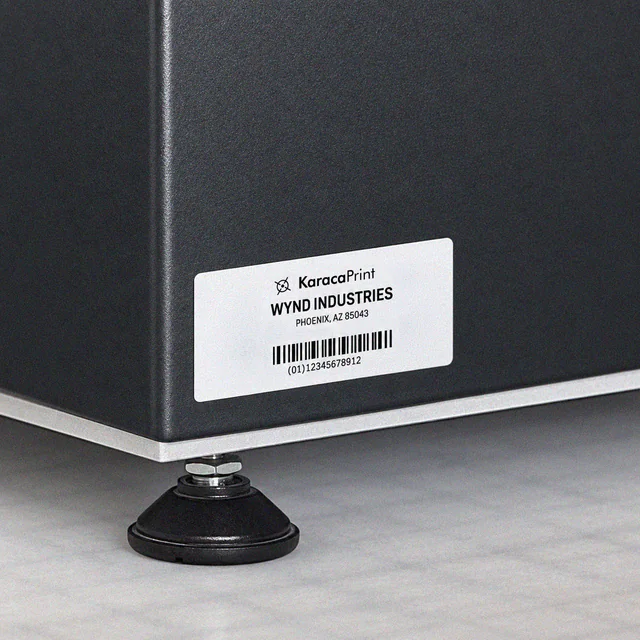
Barcode & QR Labels
Labels that match your records with fixed or variable barcodes, QR codes, names and serial numbers.
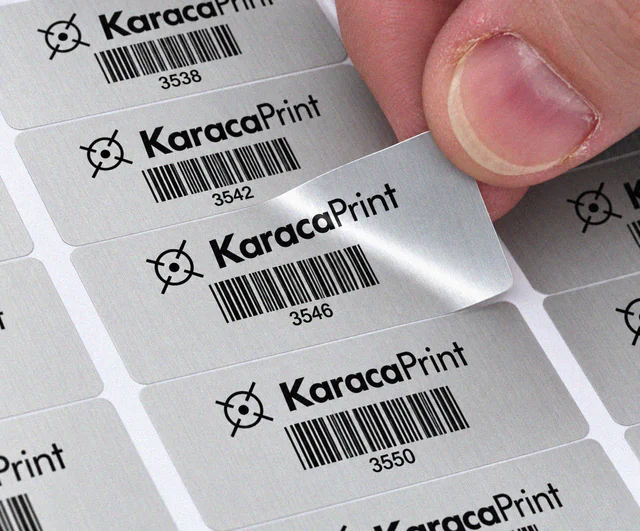
Matt Silver Labels
Matt silver labels carrying model, serial number and code details on devices, machinery and assets.